

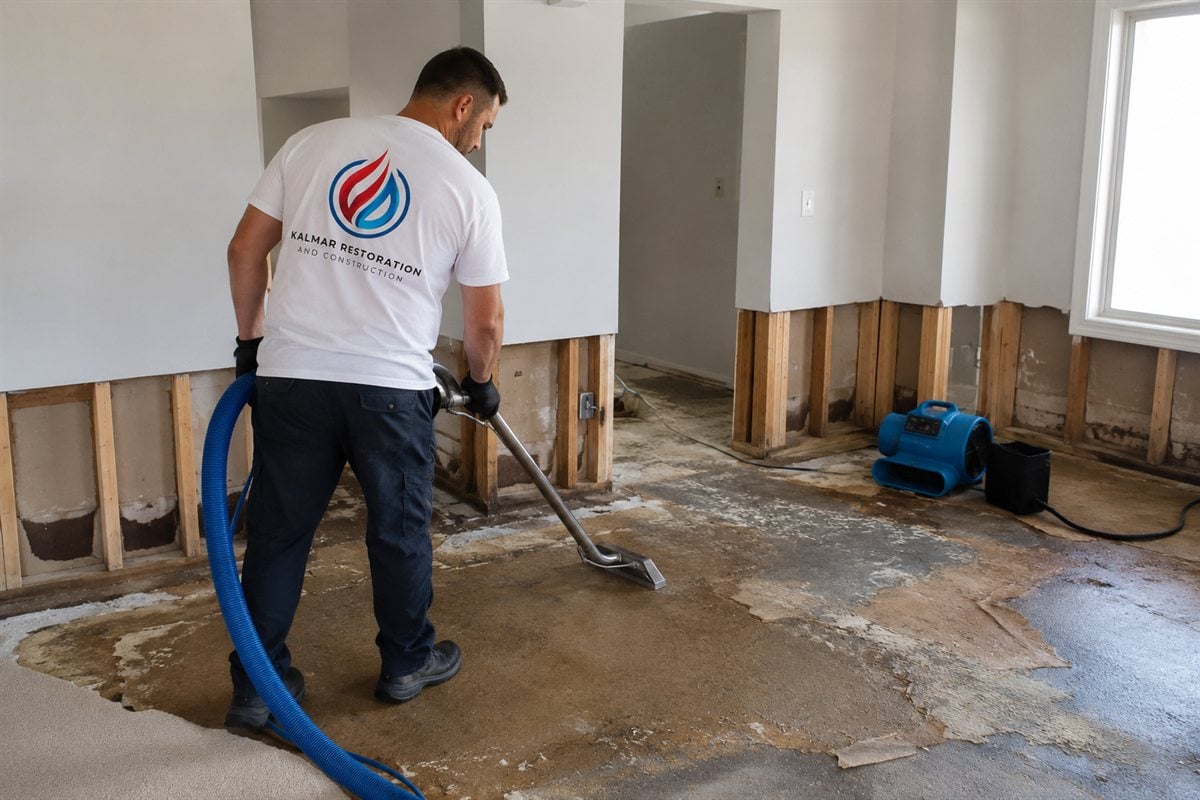
How Water Damage Actually Happens in Salt Lake City
The valley's geography writes the script. East-side homes from the Avenues down through Sugar House mostly fight pressurized failures. Think aging galvanized lines, water heaters in finished basements, and ice dams on hundred-year-old rooflines. The water arrives suddenly and from above.
West of I-15, the story flips. Rose Park, Glendale, and Poplar Grove sit on the valley floor where the water table rides high. Spring snowmelt has nowhere to drain. Water arrives slowly and from below, wicking up through slabs and seeping into window wells. Different physics, different drying plan.
Then there is the calendar. January cold snaps burst pipes in uninsulated walls and vacant rentals. March and April send the melt downhill. Summer adds swamp cooler supply lines, which fail quietly on rooftops and rain through ceilings. October catches everyone who forgot to blow out sprinkler lines before the first hard freeze.
We plan crews and equipment around that calendar because we live on it too. So the response starts with the right question. Not “how much water,” but “which Salt Lake City failure is this?”
The Numbers Behind the Risk
Salt Lake City's water risk is measurable, and the measurements explain our urgency.
The airport's climate normal is 56.2 inches of snow a year1, and all of it eventually melts toward somebody's foundation. FEMA's flood insurance program has paid 403 claims in Salt Lake County2, and groundwater flooding rarely qualifies for standard homeowner coverage. Once materials are wet, the EPA warns that mold can establish within 24 to 48 hours3. That window is why drying speed is not a luxury. The city holds 92,652 households with a median home value of $539,5004. The asset under that water is usually the family's largest.
- NOAA NCEI U.S. Climate Normals 1991-2020, station USW00024127 (Salt Lake City International).
- FEMA OpenFEMA NFIP Claims dataset, Salt Lake County, Utah, retrieved June 2026.
- EPA, “Mold Cleanup in Your Home,” epa.gov/mold.
- U.S. Census Bureau QuickFacts, Salt Lake City city, Utah (2020-2024 ACS).
Wet Right Now? Start the Clock in Your Favor
Every hour of standing water grows the scope. Call Kalmar now, and we will walk you through the shutoff while a Salt Lake City crew rolls your way.
Our Salt Lake City Water Response
The process is IICRC S500 underneath, but the execution is local. Here is how it runs on your side of the valley.
Dispatch From Inside the City
Crews stage in Salt Lake City, not a distant suburb, so the drive is minutes. On the phone, we triage the shutoff and what to move while the truck is rolling.
Extract With the Source in Mind
A burst supply line in Yalecrest gets shut, extracted, and opened up at the wet wall. A groundwater intrusion in Glendale gets pumping plus a plan for where the water will try to return.
Map Moisture Through Local Materials
Plaster and lath in an Avenues four-square holds water differently than drywall in a Daybreak-era build. We meter and map to the material, then cut only what the readings condemn.
Dry to Numbers, Show the Numbers
Equipment runs on a calculated plan, metered daily until the structure hits dry standard. You see the log, and so does your adjuster.
Hand Off to Our Own Rebuild Crew
The drying file becomes the rebuild scope without a second contractor entering the story. Flood cuts close, floors return, and the project ends finished.
Salt Lake City Signs You Should Not Ignore
Some signals are universal; these versions are local. Any of them is worth a call today.
A Musty Basement After the Spring Melt
Valley-floor basements that smell earthy in April are telling you about groundwater. By the time carpet feels damp, the pad below it has been wet for a while.
Ceiling Stains Under a Snowy Roof
A brown ring spreading during a freeze-thaw week is usually an ice dam working under the shingles. The cavity above the stain holds more water than the stain shows.
A Hissing Wall in a Pre-War Home
Original galvanized lines fail from the inside out. A faint hiss behind plaster, or a water bill that jumped, means a hidden line is leaking somewhere in the run.
Window Wells That Hold Water
Wells that pond after storms eventually leak through the seal. Westside homes see this most, and the fix beats the flood every time.
Warm Floors Over a Slab
A warm stripe across a slab floor often marks a hot-side slab leak. Catching it early keeps the jackhammer work small.
Why Salt Lake City Picks Kalmar for Water
Valley-Floor and Bench Experience in One Crew
Groundwater jobs west of I-15 and pressure-failure jobs on the east bench need different instincts. Our crews run both every week, so your home gets the right playbook on arrival.
Drying Logs Your Adjuster Recognizes
We dry to IICRC S500 and document daily readings room by room. Salt Lake City claims move faster when the file does the arguing.
Rebuild Without the Contractor Hunt
The construction half of Kalmar restores what the water half removed. Flood cuts in a Sugar House bungalow get closed by people who match plaster, not just hang board.
Equipment Staged for Cold-Snap Surges
When a January freeze hits the whole valley at once, demand spikes overnight. We stage extra extraction and drying capacity in the city for exactly those weeks.
Where Water Finds Salt Lake City Homes
Rose Park and Glendale
High water table plus slab and shallow-crawl construction makes spring seepage the signature loss here.
Sugar House
Finished basements in 1920s-40s bungalows, where old laterals back up and water heaters quietly rust out.
The Avenues and Capitol Hill
Century-old supply lines and steep rooflines that build ice dams in freeze-thaw cycles.
East Bench and Federal Heights
Long exterior line runs and sprinkler systems that freeze first when canyon air drops the temperature.
Downtown and Ballpark
Multi-unit buildings where one failed washer hose involves three insurance policies and a lot of documentation.
Liberty Wells and Poplar Grove
Post-war ramblers with aging additions, where the addition's plumbing meets the original house in the wettest possible spot.
Water Damage in Salt Lake City: Local FAQs
How fast can you reach my Salt Lake City home?
Our crews are based in the city, and water calls dispatch around the clock. In-city response is measured in minutes, even at 3 a.m.
Does insurance cover snowmelt flooding here?
Usually not under standard homeowner policies, because groundwater is excluded; sudden pipe failures usually are covered. We document the source carefully, since that distinction decides the claim.
My basement floods every spring. Can you fix the cause?
We dry the damage and identify the intrusion path, from grading to window wells to sump capacity. Then we fix or coordinate the fix, so April stops being an annual event.
Do I need to worry about mold after a small leak?
Yes, if anything stayed wet past the EPA's 24-to-48-hour window. Quick metered drying is exactly how we keep a water job from becoming a mold job.
Will you rebuild the flood cuts and flooring?
Yes, our own reconstruction crew handles the rebuild, including finish-matching in older homes. See our Salt Lake City reconstruction page for how that works.
What does water restoration cost in Salt Lake City?
Scope follows the moisture map: category of water, square footage, and what must be removed. You get a written scope before work starts, and we document for insurance from hour one.
The Valley Drains Toward Somebody. Do Not Let It Be You.
If water is moving in your home right now, shut the main and call us before anything else. Kalmar Restoration & Construction answers 24/7 from right here in Salt Lake City. Request emergency water service now.
See also: mold removal in Salt Lake City, reconstruction in Salt Lake City, and all of our service areas.