
Our Mold Removal Process
Real remediation is a sequence, and skipping a step is how mold comes back. We follow the ANSI/IICRC S520 standard on every Wasatch Front job.
Find the Moisture First
Every colony has a water source, and removal without finding it is temporary. We trace the leak, condensation, or seepage before anything gets cut. Meters and thermal imaging do the looking, so the answer is measured rather than assumed.
Build Containment
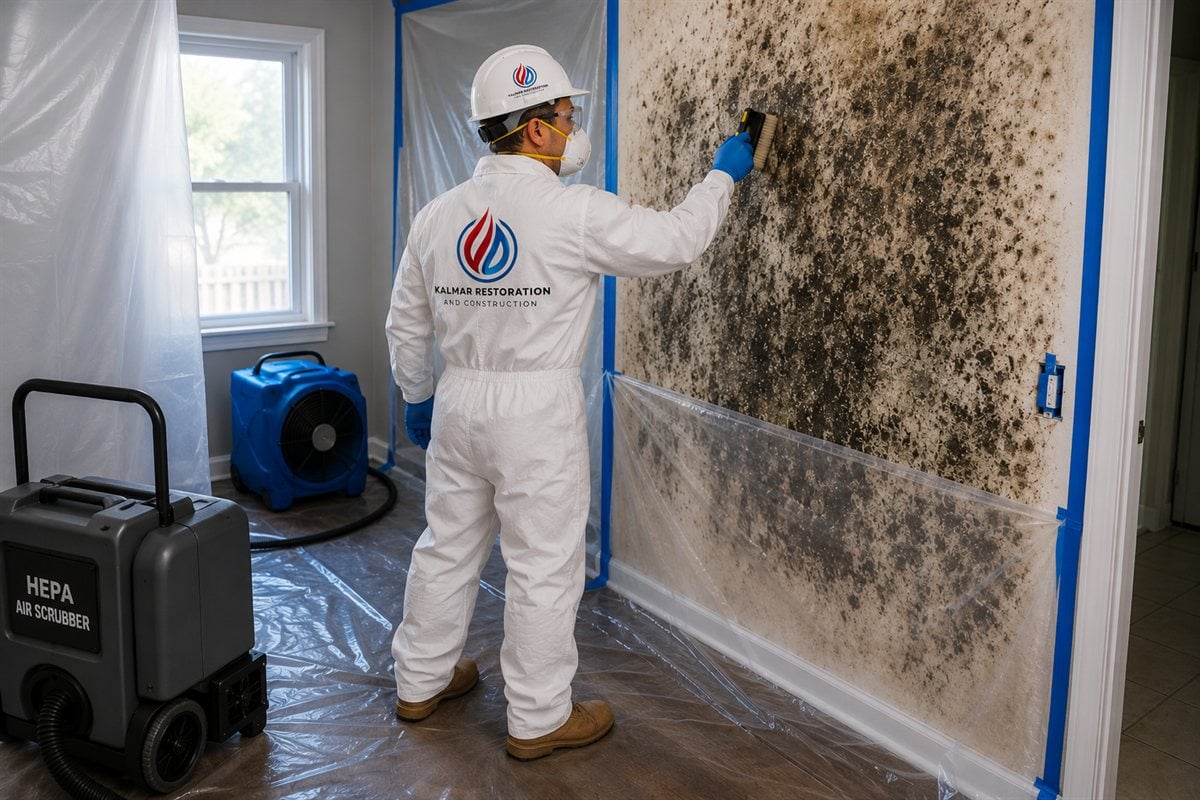
Plastic barriers and negative air pressure keep spores out of the rest of your home. Skipping containment turns one moldy wall into a whole-house problem. We seal vents and doorways before the first piece of drywall moves.
Filter the Air
HEPA air scrubbers run from the first cut to the final wipe-down. They capture the spores that demolition inevitably stirs up.
Remove Contaminated Materials
Porous materials with growth, like drywall and carpet pad, get bagged and removed. Hard surfaces get cleaned and treated instead of trashed.
HEPA Clean the Work Area
Every surface inside containment gets HEPA vacuumed and damp wiped. The goal is a space that passes inspection, not one that just looks better.
Fix the Source
We repair the moisture problem that started it, or coordinate the fix, before closing up. This step is the difference between removal and a subscription. A wall closed over a live leak is a callback with our name on it.
Verify and Rebuild
The space is verified dry and clean before rebuild begins. Then our construction side restores the drywall, paint, and trim under the same contract.
Mold Situations We Handle
Mold shows up in different corners of a home for different reasons. We remediate all of these across the Salt Lake Valley. The room tells us where to look, and the moisture tells us why it is there.
Basement and Crawl Space Mold
Below-grade spaces catch seepage, condensation, and humidity that the rest of the house never feels. We remediate the growth and address the dampness that invited it.
Bathroom and Kitchen Mold
Winter-sealed homes trap shower steam and cooking moisture against cold exterior walls. We remove the growth and tell you honestly whether ventilation needs fixing.
Attic Mold
Roof leaks and bath fans venting into the attic feed colonies you never see. We remediate and flag the ventilation or roofing issue behind it. Most attic growth gets discovered during a sale, which is the worst possible timing.
Post-Flood Mold
Water damage dried slowly, or dried wrong, grows mold inside wall cavities. We open the cavity, remediate, and finish the drying job properly. If another company dried your home and the smell stayed, this is usually why.
Swamp Cooler Mold
Evaporative coolers add moisture by design, and their ducts and pads can harbor growth. We clean up what they cause and help you decide on prevention.
Whole-Room Remediation
When growth covers serious square footage, we contain, remove, and rebuild room by room. Big jobs get the same verification standard as small ones.
Commercial Mold Remediation
Tenants, employees, and inspectors raise the stakes on commercial growth. We contain and remediate with documentation that satisfies landlords, health departments, and worried staff alike.
Why Mold Grows in a Desert City
Salt Lake City sits in a semi-arid valley, yet our mold calls never stop. The reason is simple: mold follows indoor water, not outdoor weather.
Slow Leaks Behind Walls
A pinhole supply leak can feed a colony for months before the smell gives it away. Dry climate or not, the inside of that wall is a greenhouse. By the time a stain shows, the colony is usually older than you think.
Basements Below the Water Table
Spring snowmelt pushes moisture through foundation walls in valley neighborhoods. Carpet against a damp concrete wall is a standing invitation.
The 24 to 48 Hour Window, Missed
Per the EPA, wet materials need to be dried within 24 to 48 hours to head off growth. A weekend trip during a small leak is all it takes.
Swamp Coolers and Humidity Pockets
Evaporative cooling adds moisture to the air all summer. Closets and corners with poor airflow collect it.
Winter Condensation
Sealed-up homes in January push warm interior air against freezing windows and walls. The condensation line becomes a mold line by March. North-facing rooms and closets against exterior walls show it first.
Bad Ventilation in Wet Rooms
Bathrooms without working fans, and fans that vent into attics, dump moisture where it cannot escape. The growth shows up one drywall seam at a time.
Signs You Need Mold Removal
You do not need visible black spots to have a real problem. Any of these is reason enough to get eyes on it. Early calls almost always cost less than patient ones.
A Musty Smell That Will Not Leave
If a room smells earthy no matter how much you clean, something is growing. The smell is strongest where the air sits still.
Visible Spots That Return After Cleaning
Surface cleaner removes the stain but not the colony inside the material. Growth that comes back is rooted deeper than a wipe can reach.
Allergies That Improve When You Leave Home
Congestion, coughing, or irritated eyes that ease at work and return at home follow a pattern. Your house is telling you something.
Anything After a Water Event
A past flood, leak, or sewer backup that was not professionally dried is the most common origin story we hear. Mold from missed moisture shows up weeks later.
Bubbling Paint or Warping Drywall
Materials deforming from the inside mean moisture lives in the cavity. Where the moisture is, the mold usually is too.
Why Homeowners Pick Kalmar for Mold
Mold work rewards discipline more than marketing. Here is what our discipline looks like in practice. Every item below is checkable on your own job, not a slogan.
S520 Containment on Every Job
We work to the ANSI/IICRC S520 mold standard, with real containment and negative air. No open-door demolition that seeds the whole house with spores. The standard exists because shortcuts here are invisible until they are expensive.
We Fix the Water, Not Just the Stain
Every Kalmar remediation includes finding and addressing the moisture source. Removal that skips this step is a repeat appointment in disguise.
Removal and Rebuild, One Contract
After remediation, the same company rebuilds the drywall and finishes. Your project does not stall between a mold crew and a contractor who has not called back.
Honest Scopes for Salt Lake City Homes
Some jobs need a contained remediation, and some need a cleaning and a better bath fan. We tell you which one you have, even when it is the cheap one. A right-sized scope today is how we earn the bigger call later.
Mold Removal Across the Wasatch Front
We remediate mold in Salt Lake City, Draper, Provo, Orem, Layton, Park City, Heber City, and Tooele. Basement seepage in the valley and condensation in the mountains get the same containment standard. Browse all coverage on the areas we serve page, or see what we do in Salt Lake City specifically.
Each area grows mold its own way. Park City ski properties trap humidity in winter-sealed great rooms. Valley ramblers collect it in cool basements that never quite dry. Knowing the local pattern is half of finding the source.
Mold Removal Questions We Hear Most
Asked by homeowners at kitchen tables across the valley. Answered without the scare tactics.
Is mold dangerous?
Mold exposure can trigger allergies and respiratory irritation, and sensitivity varies by person. The EPA recommends removing growth and fixing moisture regardless of mold type.
Do you test before removing?
When growth is visible, testing is often unnecessary and we say so. When it is hidden or disputed, our mold inspection service answers the question first.
How much does mold removal cost?
Cost follows the size of containment and how much material must come out. We quote after seeing it, and we separate must-do work from nice-to-do work.
Can I remove mold myself?
The EPA suggests homeowners can handle patches under about ten square feet. Beyond that, or after sewage and floods, containment and protective equipment matter.
Will the mold come back?
Not if the moisture source is actually fixed, which is why we make it part of the job. Mold without water is a chemistry problem with no fuel.
Does insurance cover mold removal?
Often only when it results from a sudden covered water loss, and policies vary widely. We document the chain of events so your claim is as strong as the facts allow.
How long does remediation take?
Small contained jobs can finish in a day or two; larger ones run closer to a week with verification. Rebuild time depends on what had to come out.
Do I need to leave my home during remediation?
Usually not, because containment and negative air keep spores inside the work zone. We will tell you plainly if your specific job is the exception.
What is the difference between removal and remediation?
Removal takes out the visible growth; remediation adds containment, air filtration, and the moisture fix. We quote remediation, because removal alone is how the problem returns.
Can I just spray it with bleach?
Bleach lightens the stain on porous materials without killing the roots inside them. The growth returns, often behind fresh paint where you cannot watch it.
Smell It? See It? Stop Wondering
The cheapest mold job is the one caught early. Tell Kalmar Restoration & Construction what you are seeing and smelling. We will tell you what it likely is and what to do next. Book a mold assessment anywhere in the Salt Lake City area, and get an answer instead of anxiety.