
How We Dry a Home, Step by Step
A wet house is not fixed by fans and hope. Our water damage restoration process follows the IICRC S500 standard from first call to final reading. Every step leaves a paper trail your insurer can follow.
Triage on the Phone
The first minutes matter, so we start before we arrive. We walk you through shutting the supply valve, killing power to wet areas, and what to move upstairs. Those ten minutes of phone triage routinely save thousands in secondary damage.
Stop the Source
Drying a home while the leak still runs is theater. We find and stop the source first, whether that is a split supply line or a failed water heater.
Extract the Standing Water
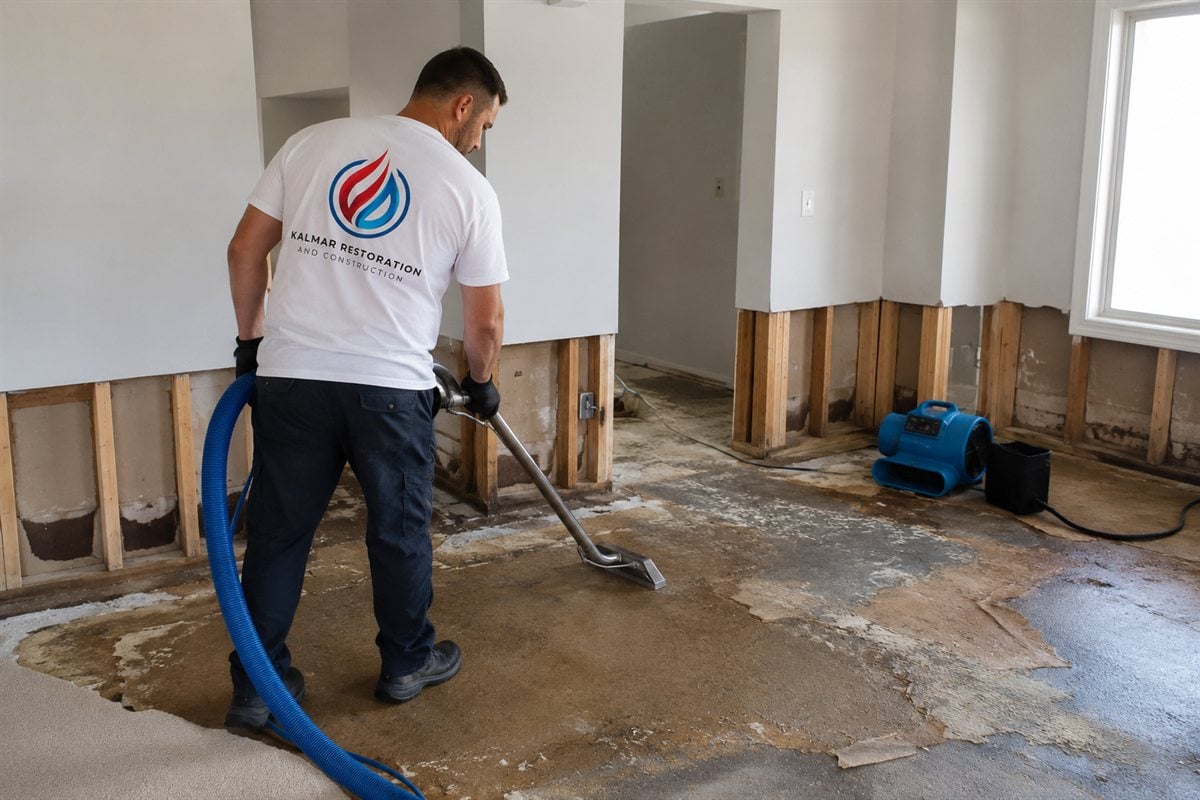
Truck-mounted extraction pulls hundreds of gallons out far faster than shop vacs. Getting bulk water out quickly is the single biggest factor in what survives. Carpet, pad, and hardwood all have rescue windows measured in hours.
Map the Moisture
Water travels inside walls in ways your eyes cannot follow. We map the true wet boundary with moisture meters and thermal imaging, then mark it. The map becomes the scope, so nothing wet gets sealed up and nothing dry gets torn out.
Remove What Cannot Be Saved
Soaked carpet pad, swollen particle board, and saturated drywall do not come back. We cut out only what the readings condemn and document every square foot for your claim.
Dry and Measure Daily
Air movers and dehumidifiers run on a calculated plan, not a guess. We meter the structure daily and adjust equipment until the numbers hit dry standard. You can read the log any day and see exactly where your house stands.
Verify, Then Rebuild
Drying ends when the readings say so, never when the schedule does. Then our own construction crew rebuilds the drywall, flooring, and trim under the same roof.
What Our Water Damage Service Covers
Water emergencies come in more flavors than a burst pipe. Each of these situations gets the same metered, documented process. The difference is in the handling, from containment level to what insurance expects to see.
Burst and Frozen Pipe Cleanup
A January cold snap can split a pipe and dump water all night. We extract fast, dry the cavity, and help document the failure point for your insurer.
Basement Flooding
Salt Lake area basements catch everything: snowmelt seepage, window well leaks, failed sump pumps. We pump them down, dry them out, and address the path the water took.
Sewage Backup Cleanup
Category 3 water carries real health risk and demands containment, not just drying. We remove contaminated materials, disinfect, and verify the space is safe before rebuild.
Appliance and Water Heater Failures
Water heaters, washing machine hoses, and dishwasher lines fail quietly and flood thoroughly. We handle the cleanup and dry the platforms and closets they soak.
Ceiling and Roof Leak Damage
Ice dams and roof failures send water through insulation and ceilings. We dry the cavity, remove sagging drywall safely, and coordinate the rebuild.
Contents and Document Drying
Furniture, rugs, and paperwork have a rescue window too. We triage what can be dried, cleaned, or restored, and we are honest about what cannot.
Commercial Water Losses
A flooded office or shop loses money by the hour, not just drywall. We stage drying around your operating hours and keep walkways and exits usable while equipment runs.
What Floods Salt Lake City Homes
Knowing the local failure points helps you prevent the second flood, not just survive the first. These are the causes we see across the Wasatch Front.
Hard Freezes and Pipe Bursts
When canyon winds drop temperatures below zero, pipes in exterior walls and crawl spaces freeze and split. The flood starts when the thaw arrives. Vacant rooms and vacation weeks are when these losses grow largest.
Ice Dams on the Roofline
Salt Lake City averages over 56 inches of snow a season at the airport, per NOAA climate normals. Snow that melts and refreezes at the eaves backs water under shingles.
Spring Snowmelt and Groundwater
A heavy snowpack melting fast can push water through foundations and window wells. Valley floor neighborhoods feel this more than the benches. FEMA's flood program has paid 403 claims in Salt Lake County alone, and most valley homes carry no flood coverage.
Sprinkler and Stop-and-Waste Failures
Irrigation systems winterized late, or not at all, crack underground and saturate foundations. The damage often shows up indoors weeks later.
Aging Water Heaters and Supply Lines
A tank rarely fails at a convenient hour. Rubber hoses and corroded fittings give out in year ten, usually while you sleep.
Swamp Cooler Lines
Evaporative coolers are a Utah staple, and their quarter-inch supply lines fail more than any other fitting we see. A pinhole leak on the roof runs straight into your ceiling.
Signs You Need Water Damage Help Now
Some water damage announces itself, and some hides until it gets expensive. Treat any of these as a reason to call. A ten-minute phone conversation costs nothing and beats a demolition every time.
Water You Can See and Hear
Standing water, active dripping, or the hiss of a hidden line means the clock is running. Shut the main valve and call while you mop.
Stains That Grow or Darken
A ceiling or wall stain that spreads between morning and night is an active leak. The cavity behind it is wetter than the stain suggests.
Warped Floors and Swollen Trim
Cupped hardwood, lifting laminate, and baseboards pulling off the wall mean water got underneath. Surface drying will not reach it.
A Musty Smell After Any Leak
That smell is the opening act of mold, which the EPA says can start within 24 to 48 hours on wet materials. Fast drying is mold prevention.
A Water Bill That Jumped
A spike with no lifestyle change usually means a hidden leak. We can help you trace it before it becomes a demolition project.
Why Salt Lake City Calls Kalmar for Water Damage
When the basement is filling, you do not have time to vet five contractors. Here is the short version of why homeowners pick us.
The Crew That Dries It Also Rebuilds It
Kalmar is a restoration company and a construction company in one. There is no handoff gap between dry-out and rebuild, because both phases share one scope and one schedule. Your kitchen does not sit gutted for a month waiting on a second contractor.
IICRC S500 Drying, Documented Daily
We dry to the industry standard insurers recognize, with daily moisture logs to prove it. Your adjuster gets data, not adjectives.
Built for Utah Winters
Frozen pipes, ice dams, and snowmelt are our home-field events. We stage equipment and crews for the cold-snap weeks when half the valley seems to call at once.
Straight Answers About Scope
If two rooms are wet, we will not write up four. Our estimate follows the moisture map, and you can watch us take every reading.
Where We Respond
Our water crews dispatch across the Wasatch Front 24/7 from Salt Lake City. We cover Draper, Provo, Orem, Layton, Park City, Heber City, and Tooele, plus the communities between them. See every city on our areas we serve page, or jump straight to Salt Lake City for neighborhood-level detail.
Geography changes the job, so we plan for it. Park City and Heber City losses freeze harder and dry slower at altitude. Valley basements in Salt Lake and Provo fight groundwater that mountain homes never see. Either way, the response standard and the documentation are identical.
Water Damage Questions, Answered Straight
These are the questions we answer most often from Wasatch Front homeowners standing in wet socks.
How fast do you respond?
We answer around the clock and dispatch day or night across the Salt Lake area. Water losses get priority because damage compounds hourly.
Will my homeowners insurance cover this?
Sudden and accidental water damage, like a burst pipe, is commonly covered; slow leaks and groundwater often are not. We document everything so your claim has its best shot, and your adjuster makes the call.
How long does drying take?
Most structural drying runs two to four days, depending on materials and how long water sat. We meter daily and show you the numbers rather than guessing.
Can I just run fans and a dehumidifier?
Household fans dry surfaces, not wall cavities or subfloor. Per the EPA's mold guidance, materials that stay wet past 24 to 48 hours can start growing mold.
What does water damage restoration cost?
It depends on water category, square footage, and how long things stayed wet. We give a firm scope after the moisture map, and insurance covers many sudden losses.
Do you handle sewage backups?
Yes, with full containment and disinfection rather than a simple dry-out. Category 3 losses are health events, and we treat them that way.
Will you rebuild the parts you remove?
Yes. Our reconstruction crew restores drywall, flooring, paint, and trim, so you are not hunting for a contractor while your house sits open.
What should I do before the crew arrives?
Shut the main water valve, kill power to wet rooms at the breaker, and move valuables up and out. Do not run extension cords through standing water, and skip the wet vac on sewage.
Do you work with my insurance company?
Yes. We photograph the loss, share the moisture logs, and walk the scope with your adjuster on request. You stay in charge of the claim while we supply the evidence.
How do you price the work?
Pricing follows the moisture map: what got wet, what category of water, and what must come out. You get a written scope before work begins, not a number invented at the door.
Standing in Water? Make This the Only Call
Shut the main valve, step away from wet outlets, and get us moving toward your address. Kalmar Restoration & Construction answers 24/7 across Salt Lake City and the Wasatch Front. Request emergency water damage service and we will walk you through the next ten minutes.